A shooting involving multiple suspects left five people wounded outside the residence halls at Virginia State University in the pre-dawn hours of a Saturday in mid-August, a reminder that campus violence in America rarely announces itself with a single shooter or a single motive — and that the machinery colleges now keep on standby for exactly this scenario, from lockdown alerts to multi-agency task forces, is only as good as the speed with which it engages.
Key Points
- Five people were shot near VSU’s Quad Annexes around 1:30 a.m.; one victim was reported in critical condition, four with non-life-threatening injuries.
- Police say multiple suspects were involved; no arrests had been announced as the investigation continued.
- VSU Police, Chesterfield County Police, and the ATF are jointly investigating the shooting.
- The university’s campus-wide lockdown was lifted within roughly an hour, though a heightened police presence remained near the dormitories.
- The incident is the latest in a string of shootings connected to VSU’s campus over the past several years, underscoring a recurring security challenge rather than an isolated event.
What Happened Near the Quad Annexes
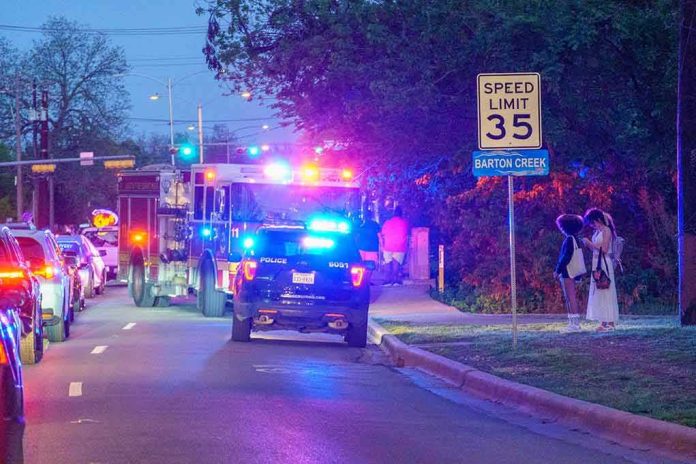
The gunfire erupted just after 1:30 a.m. outside the dormitory complex near VSU’s Quad Annexes, in the area of Boisseau Street, on a campus in Ettrick, Virginia, just south of Richmond. Officers arriving on scene found five people suffering gunshot wounds outside the residence halls, according to police accounts relayed to local media. The university’s own statement, issued on social media roughly an hour after the shooting, described multiple suspects and characterized the injuries as not life-threatening — a characterization police later revised, confirming one victim was in critical condition while four others were expected to survive.
That kind of early-hour discrepancy — a preliminary “no life-threatening injuries” giving way to a confirmed critical case — is not evidence of confusion or cover-up. It is the ordinary texture of triage: first responders classify wounds in the field before hospitals complete full evaluations, and initial statements from a university communications office are built on whatever the first responding officers relay, not on final medical assessments. The substance of the event — five people shot, multiple suspects, a locked-down campus — was consistent across every outlet reporting it, from the Associated Press to CNBC to local Richmond television.
https://www.youtube.com/watch?v=0Yz2pbh5HsM
The Response: Lockdown, Multi-Agency Investigation, No Arrests Yet
VSU’s emergency protocol functioned as designed in its first move: a campus-wide lockdown went into effect within minutes of the shooting, instructing students to shelter in place while officers secured the scene near the dormitories. That lockdown was lifted within about an hour, university officials said, once responders determined there was no continuing threat to the broader campus — even as the area immediately around the residence halls remained cordoned off and off-limits to students for the balance of the morning.
Investigative responsibility split, as it typically does in incidents straddling campus and municipal jurisdiction, between VSU’s own police department and Chesterfield County Police, with the Bureau of Alcohol, Tobacco, Firearms and Explosives joining to assist on the firearms side of the inquiry. “VSU Police and the Chesterfield County Police Department are actively investigating,” the university’s statement read. As of the most recent reporting, no suspects had been taken into custody and no motive had been disclosed — an ordinary state of affairs in the opening days of a shooting investigation involving multiple assailants, where identifying and charging suspects routinely takes days or weeks rather than hours.
A Campus With a Documented Pattern of Gun Violence
This was not VSU’s first brush with campus gunfire, and understanding that history sharpens rather than distracts from the present case. In September 2023, a VSU police officer, Bruce Foster, was critically wounded in a shooting near campus; the suspect, Deonta M. Blount, was arrested roughly two months later. That same year, a separate quadruple shooting on campus injured four people, with charges pending against multiple suspects and one man, Xavier J. Gordon, arrested and charged. A man was also found shot to death in a campus parking lot in an incident later confirmed by the university to involve someone who was not a student, and a homecoming-weekend shooting years earlier had likewise forced a lockdown. Taken together, these episodes describe a campus — and a surrounding Chesterfield County corridor — that has cycled through gun violence and emergency lockdowns with troubling regularity, independent of any single incident’s outcome.
Virginia State University Shooting Leaves 5 Injured https://t.co/265mAsroj2
— HBCU Buzz (@HBCUBuzz) August 15, 2026
Why Campus Lockdowns Move Fast — and Why the First Hour Is Never the Whole Story
Universities have invested heavily, over the past decade and a half, in emergency notification systems built around a simple design principle: alert first, refine later. That principle exists because the cost of a delayed warning during an actual attack is measured in lives, while the cost of an overcautious lockdown is measured in disrupted classes and frayed nerves. The tradeoff has produced a national landscape in which colleges lock down often — sometimes for confirmed shootings like the one at VSU, and, with rising frequency in recent years, for swatting hoaxes and false reports that turn out to involve no shooter at all, as happened at Villanova, the University of South Carolina, and more than twenty other campuses during a wave of coordinated fake threats. Distinguishing the two in real time is difficult by design; distinguishing them after the fact, through physical evidence and victim accounts, is exactly what happened at VSU, where five gunshot victims and a secured crime scene left no ambiguity about whether an actual shooting occurred.
That distinction matters for how communities and administrators should read early campus reporting generally. Journalistic postmortems of past tragedies have repeatedly shown that details — numbers of victims, severity of injuries, identity of suspects — are often revised in the first news cycle as officials and hospitals confirm information piece by piece. VSU’s own sequence, from “no life-threatening injuries” to a confirmed critical case, fits that well-documented pattern precisely; it is not a sign that the underlying event is in doubt, only that the underlying event was, as ever, reported in real time by people working from incomplete information.
What This Means Going Forward
For VSU, a historically Black land-grant university of roughly 5,800 students, the shooting arrives as one more test of a security apparatus already stretched thin by recurring violence near its residential quad. For the broader landscape of American higher education, it reinforces a lesson that campus safety officers have absorbed over the last decade: multi-suspect shootings near student housing, often tied to disputes that begin off campus and spill onto it, have become a more common threat profile than the lone-gunman classroom attack that dominates public imagination. Investigations of this kind — multiple assailants, no immediate arrests, a joint local-federal task force — typically resolve over weeks, not days, as ballistics evidence, surveillance footage, and witness cooperation slowly narrow the field of suspects. The verdict on accountability will come later; what is already established, and unlikely to change, is what happened outside VSU’s dormitories in the early hours of that Saturday.
Sources:
chesterfield.gov, vsu.edu, cnbc.com, facebook.com, wtvr.com, youtube.com, wgntv.com, apnews.com, cnn.com, abc7amarillo.com, thetrace.org, bbc.com